LÁMINA
Anima Espina, Galeria24, Quito, Ecuador, 2025
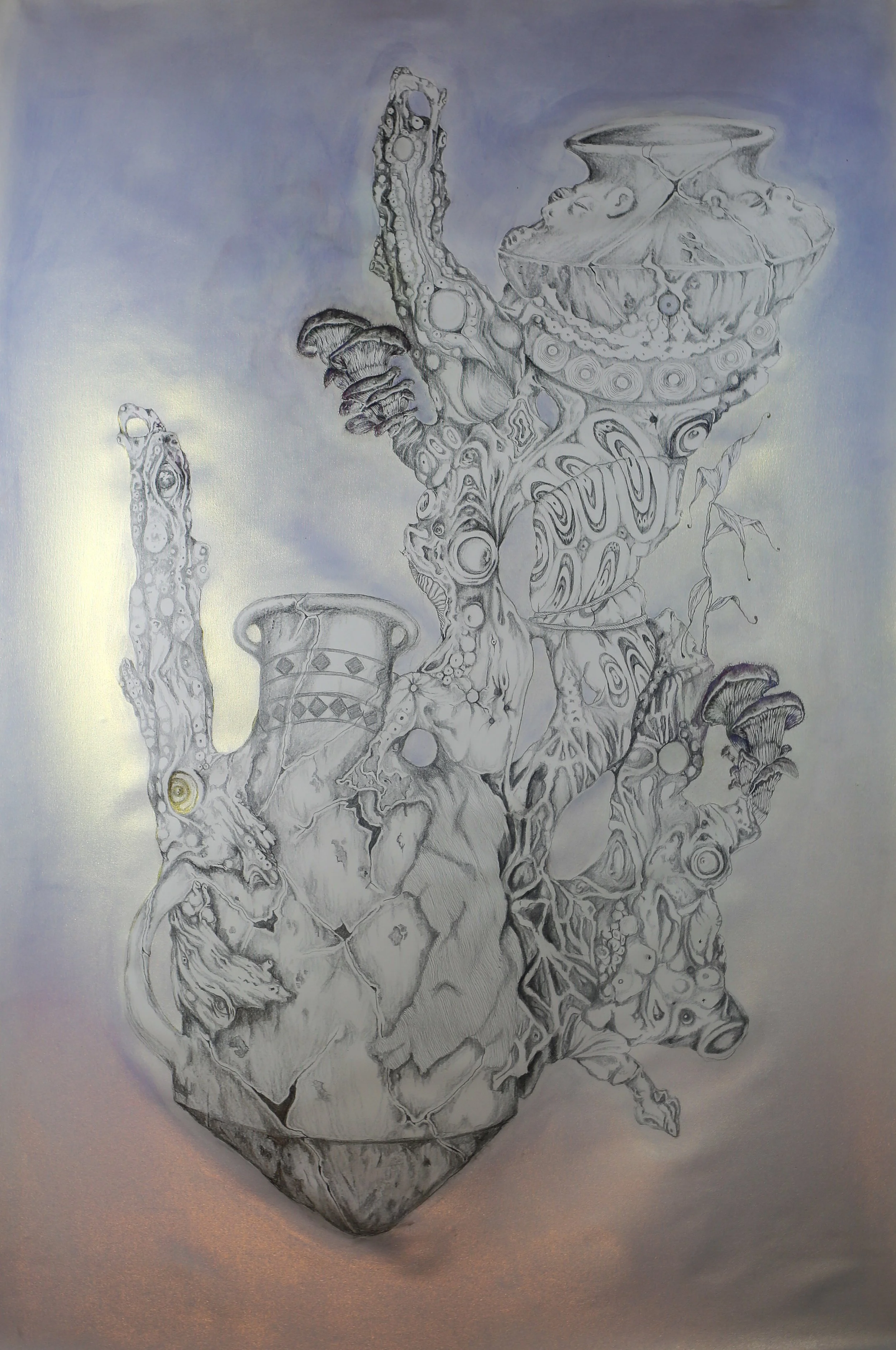
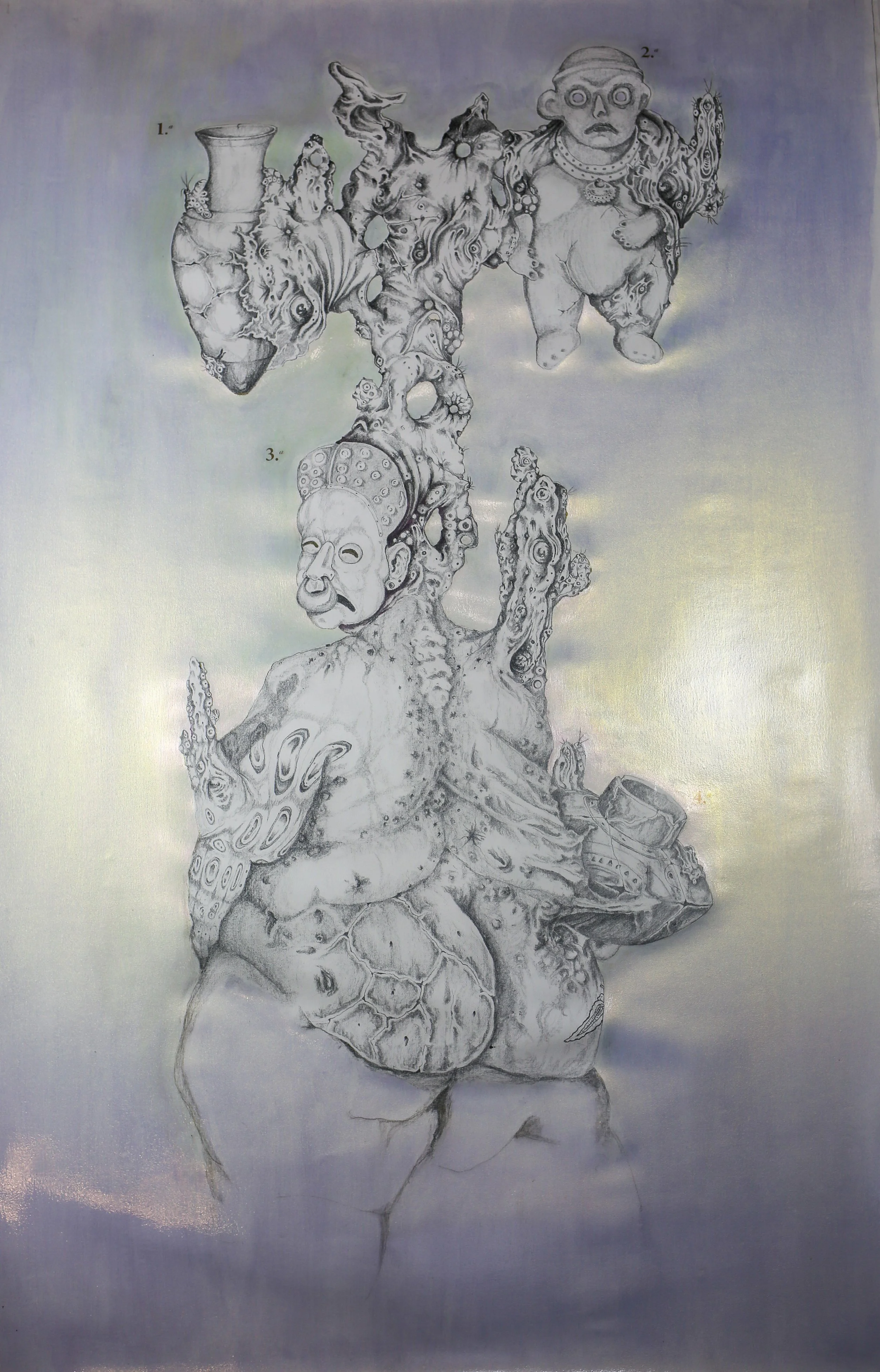
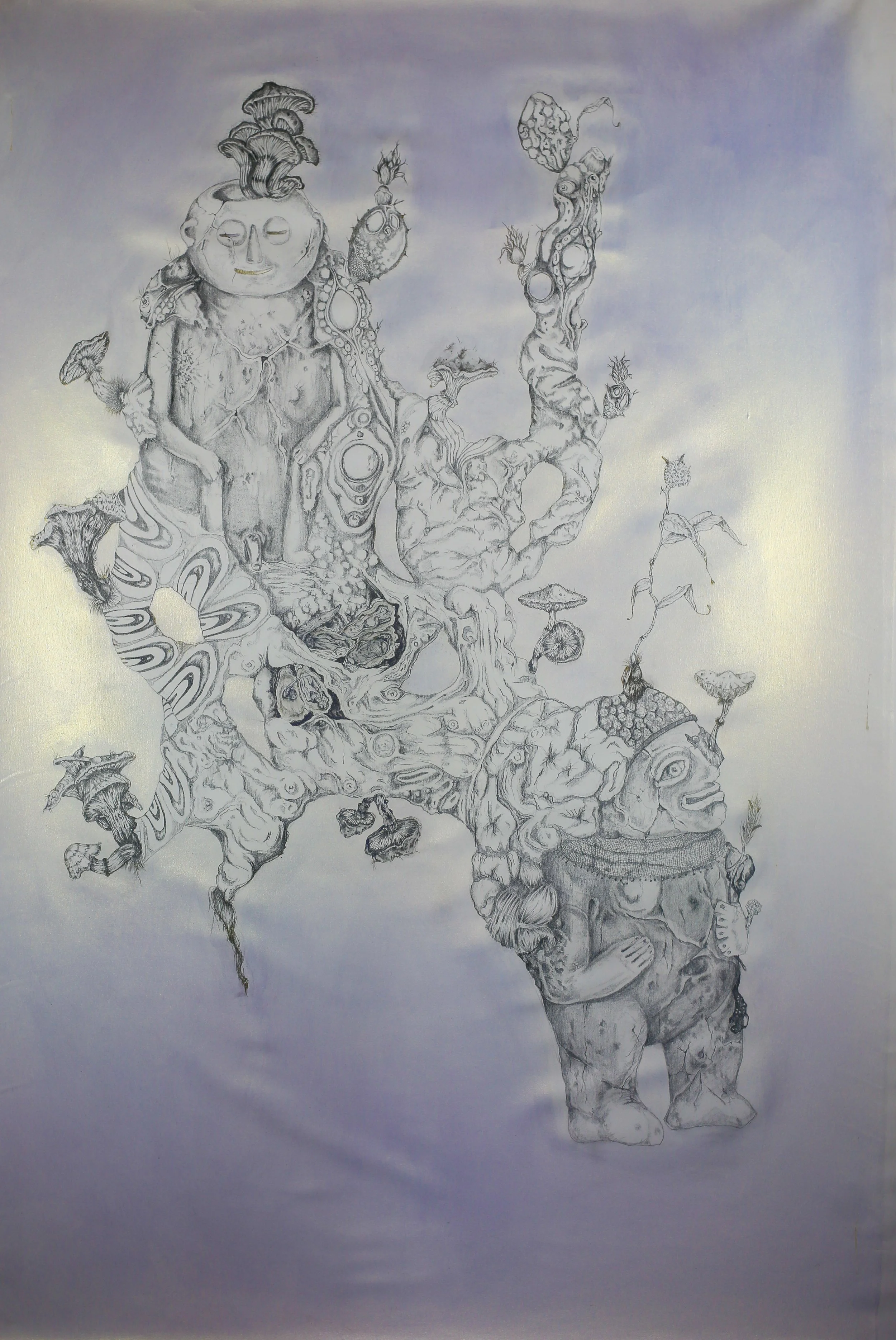
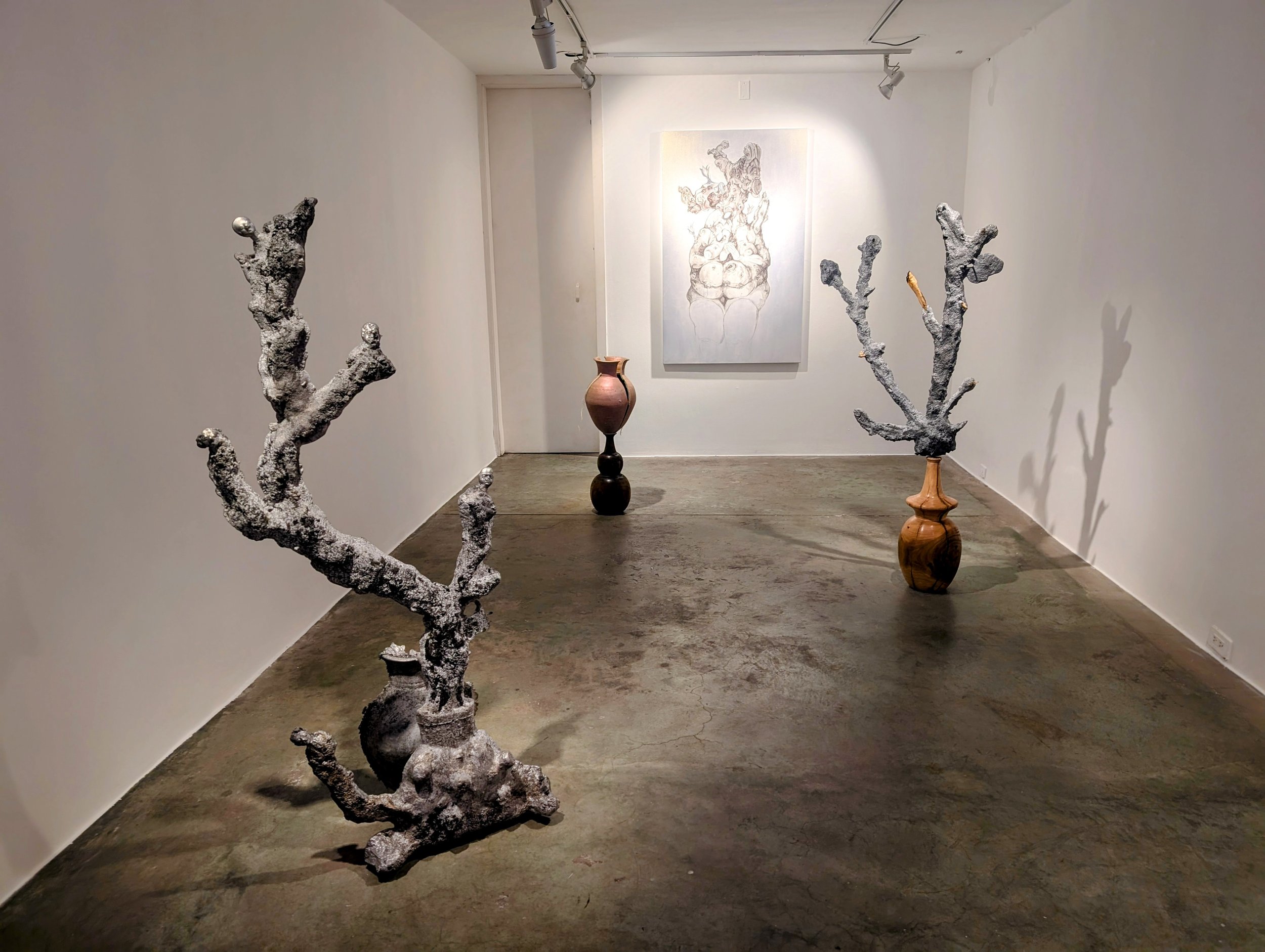
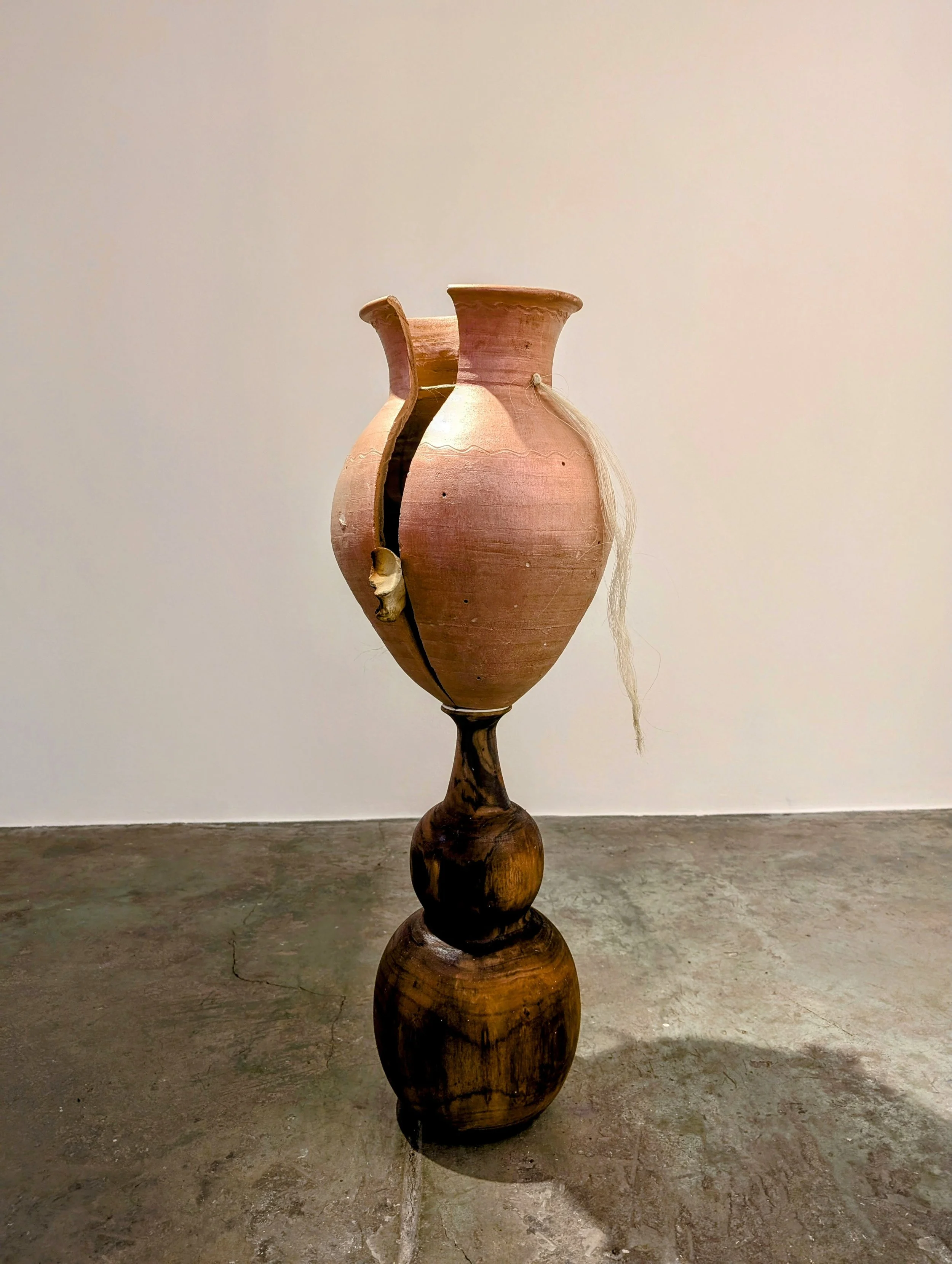
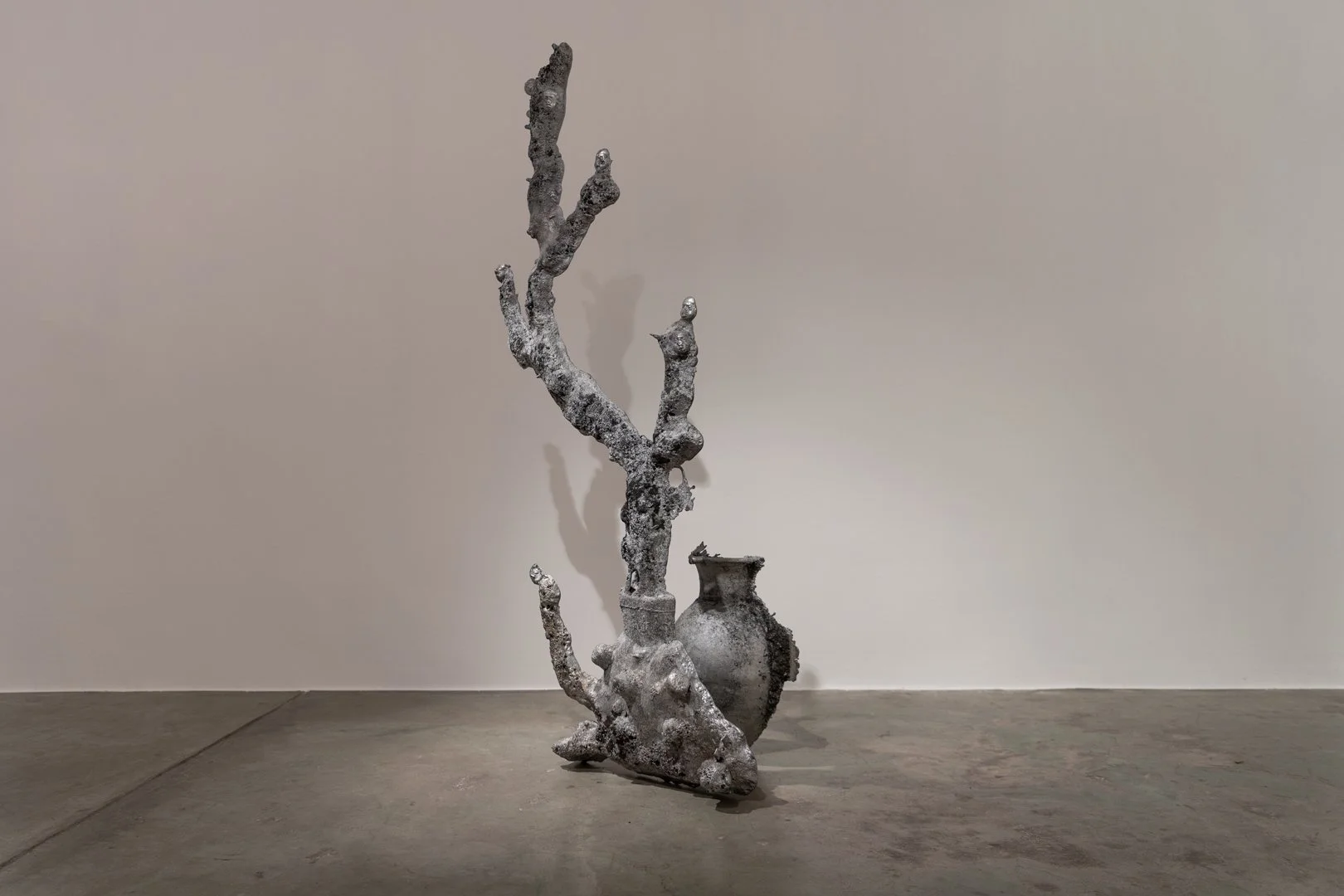
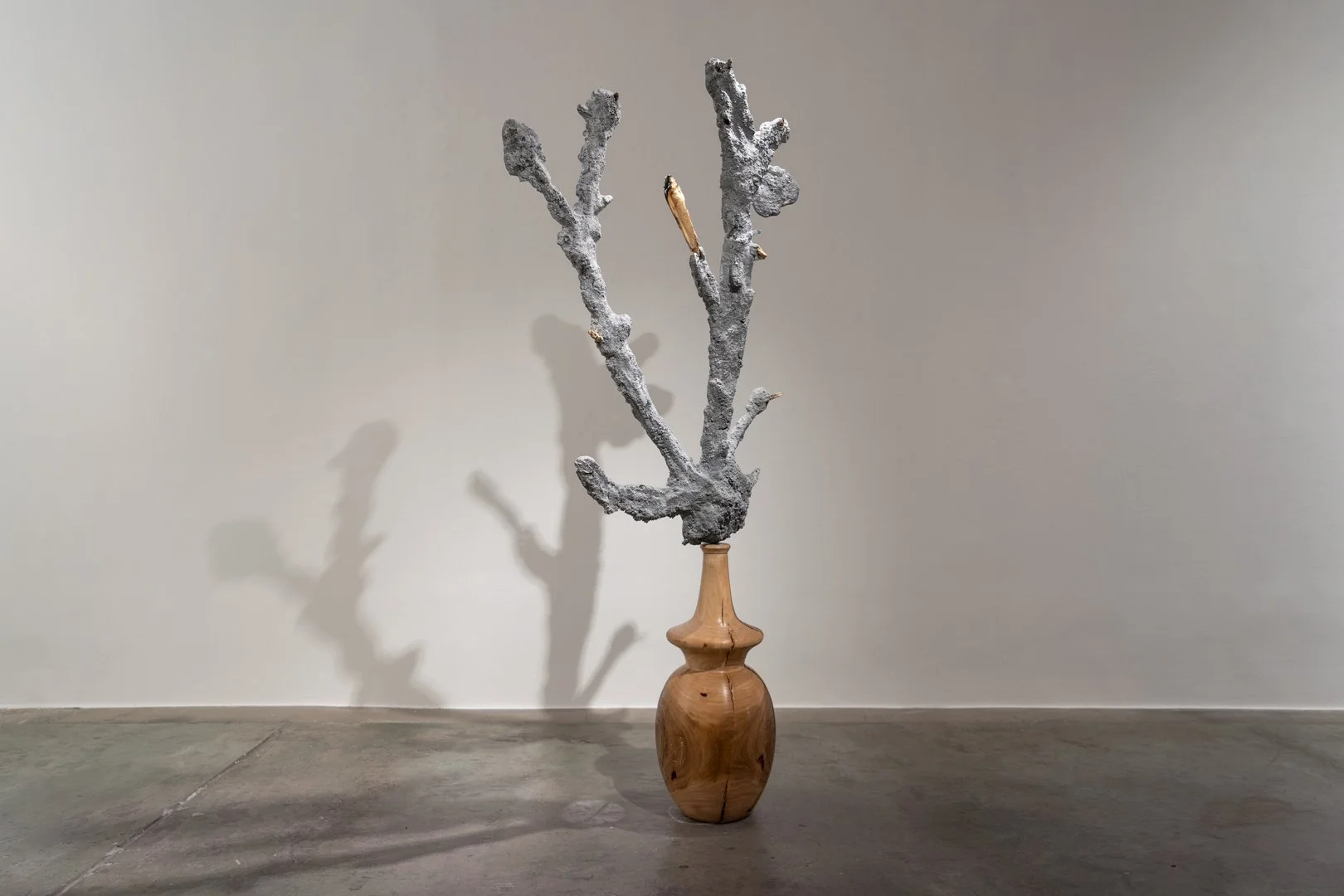
Archive without voice, bodies outside of time, cactus with a soul.
The Lámina series was born from an intimate discovery: an Ecuadorian archaeological atlas from 1892, inherited from my maternal grandfather, found among books and dust in the house where I grew up. Of its two volumes, only one has survived: the one containing only illustrations. The figures appear without context, without words, without explanation. Like mute bodies, suspended.
This unfinished atlas becomes the trigger for an imaginary archaeology. From its images, I draw new entities: mutant, hybrid. Some evoke ancient cultures from the Ecuadorian coast — such as Valdivia or Bahía — yet they deform, open, infiltrated by organs, lichens, fungi, eyes, animal textures. Within them emerge shapes I recognize as mine, or familiar: vines, glands, roots.
Among these shapes, the figure of the San Pedro cactus appears insistently. In my home in Ecuador, a San Pedro cactus has been growing since the day of my birth. It has grown with me like a vegetal and totemic guardian. In my drawings, this cactus reappears in multiple forms: as spine, as antenna, as the backbone of bodies. It is a sacred plant in Andean rituals, a channel between the visible and the invisible worlds.
The title Lámina contains within it the word ánima. As if these drawings were attempts to return a soul to these forgotten objects. The plates are interrupted documents: they do not seek to explain, but to summon. They invoke what cannot be seen: the buried, the displaced, what emerges from within.
This graphic triptych will enter into dialogue with a three-faced totemic sculpture: a cactus of metal and ceramic that acts as a medium across times. A mineral body that observes. A totem that breathes.
Perhaps it is the totem who wrote the lost atlas.
Or perhaps it stole it.
The plates, fragmented and mute, preserve only its echo.
And the drawn bodies — children of the cactus — listen to it in silence.