Carpaccio, Exploration d’un corps statique
Galerie Aperto, Montpellier, 2024
« You give yourself up to the mouth of the scanner – a high-tech sepulchre of sorts – your knees up, foetus-like »
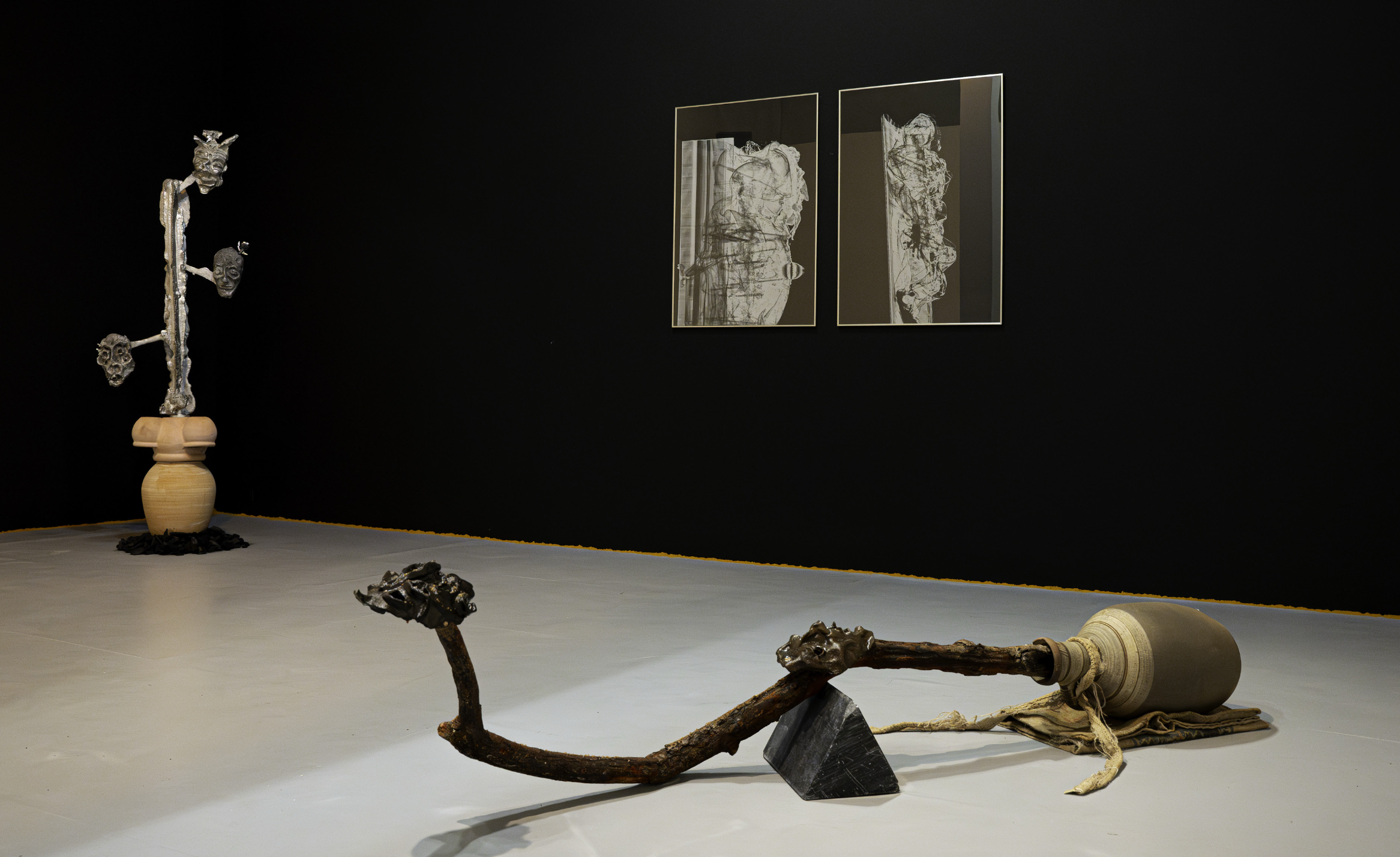
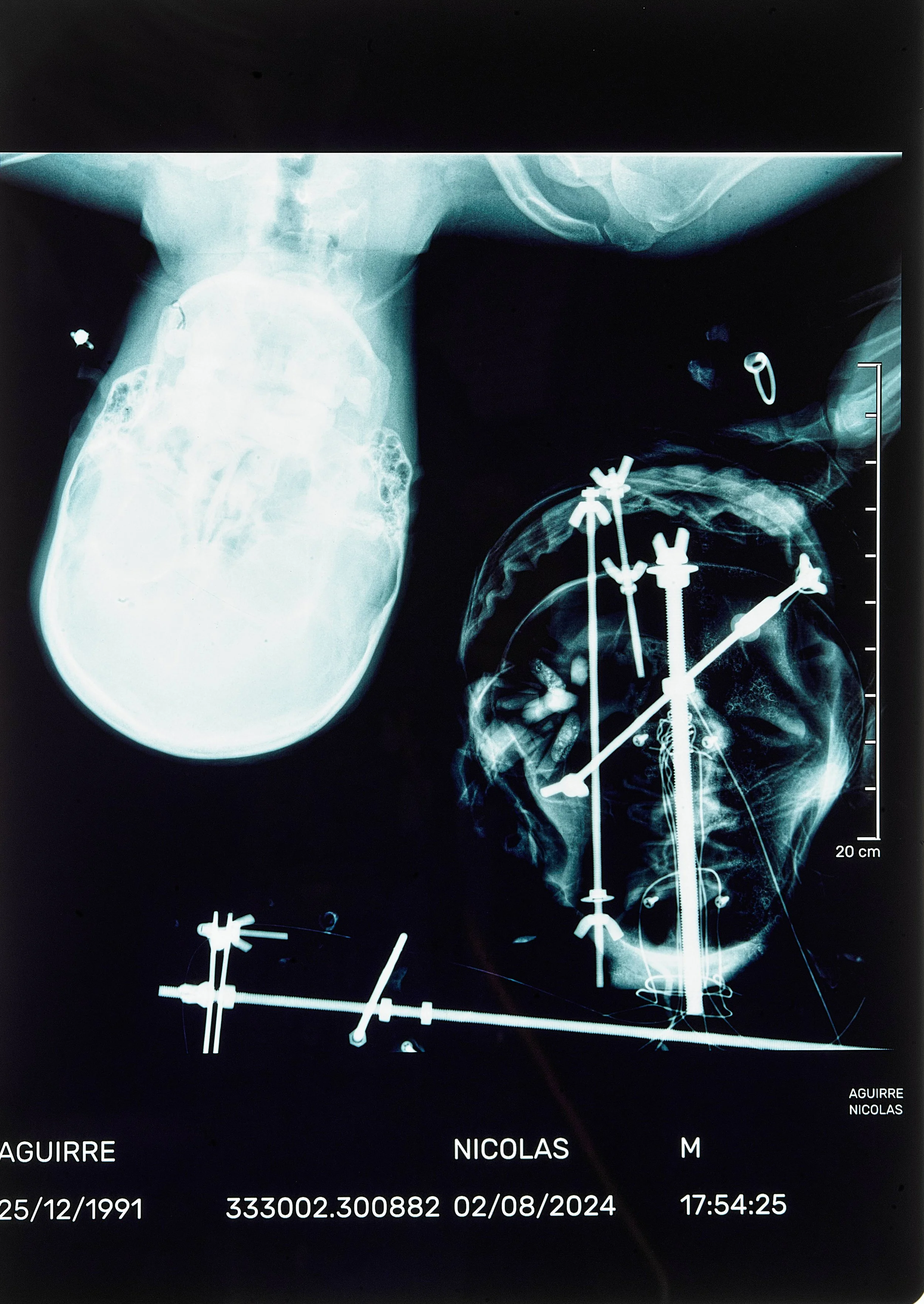
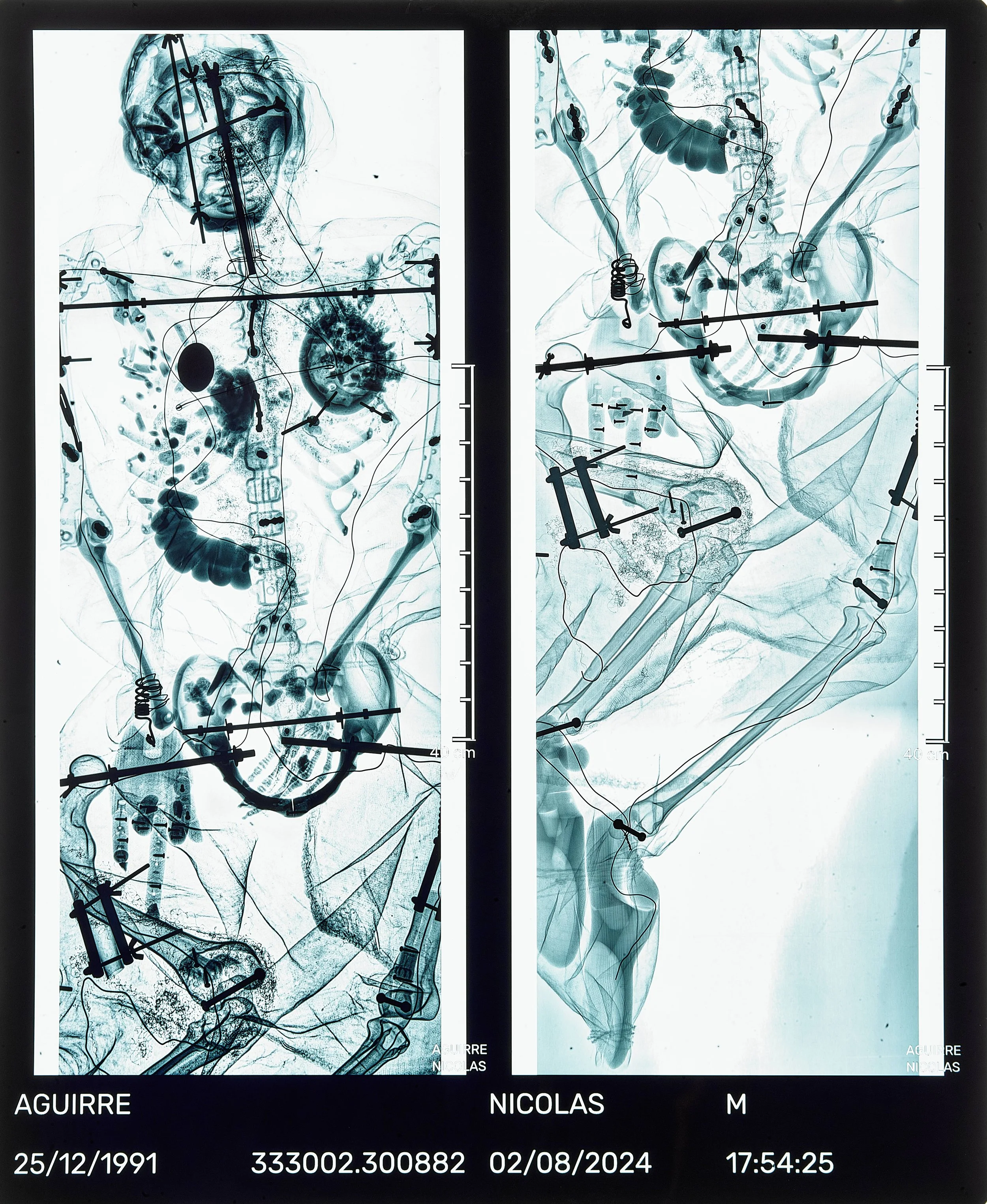
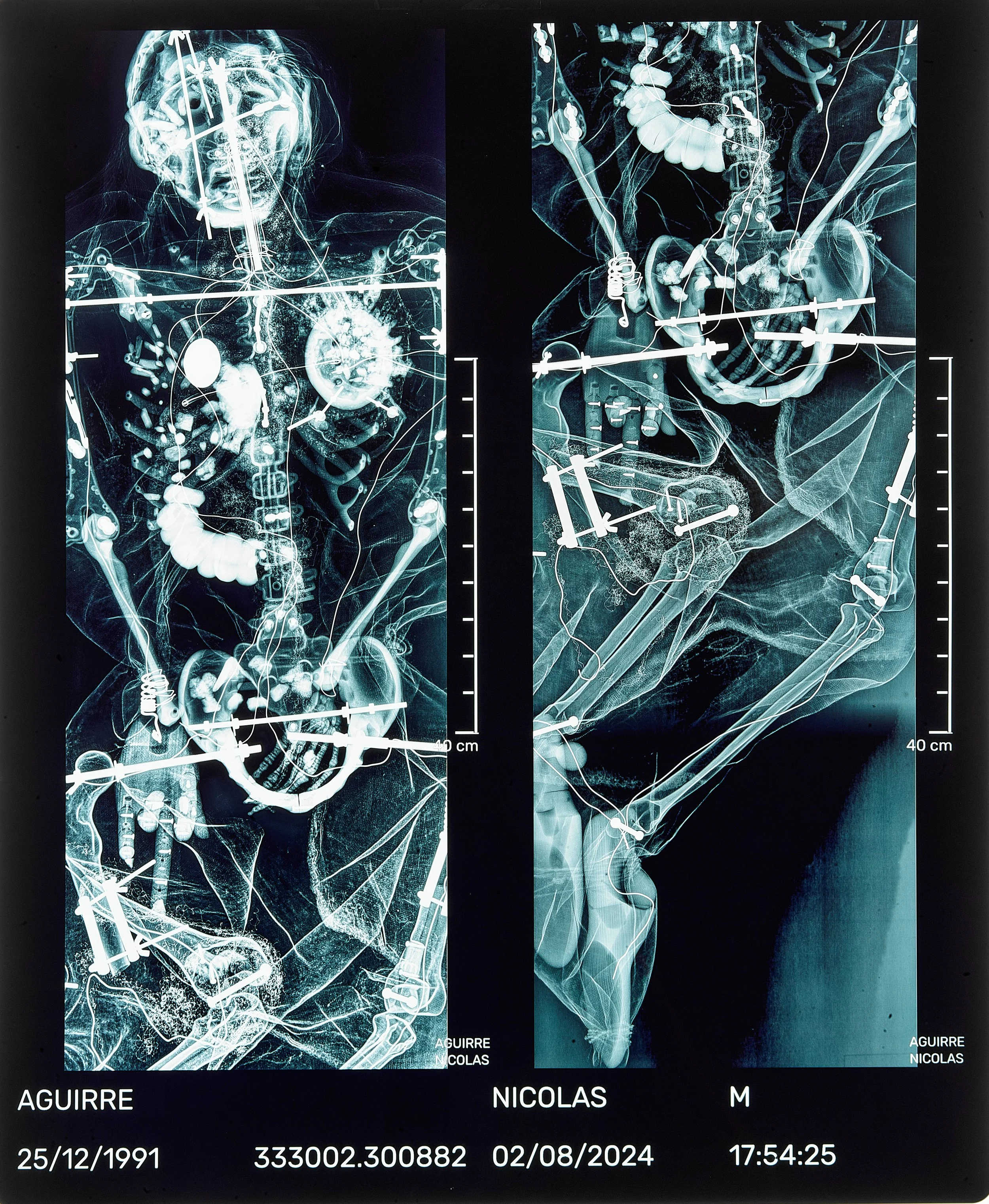
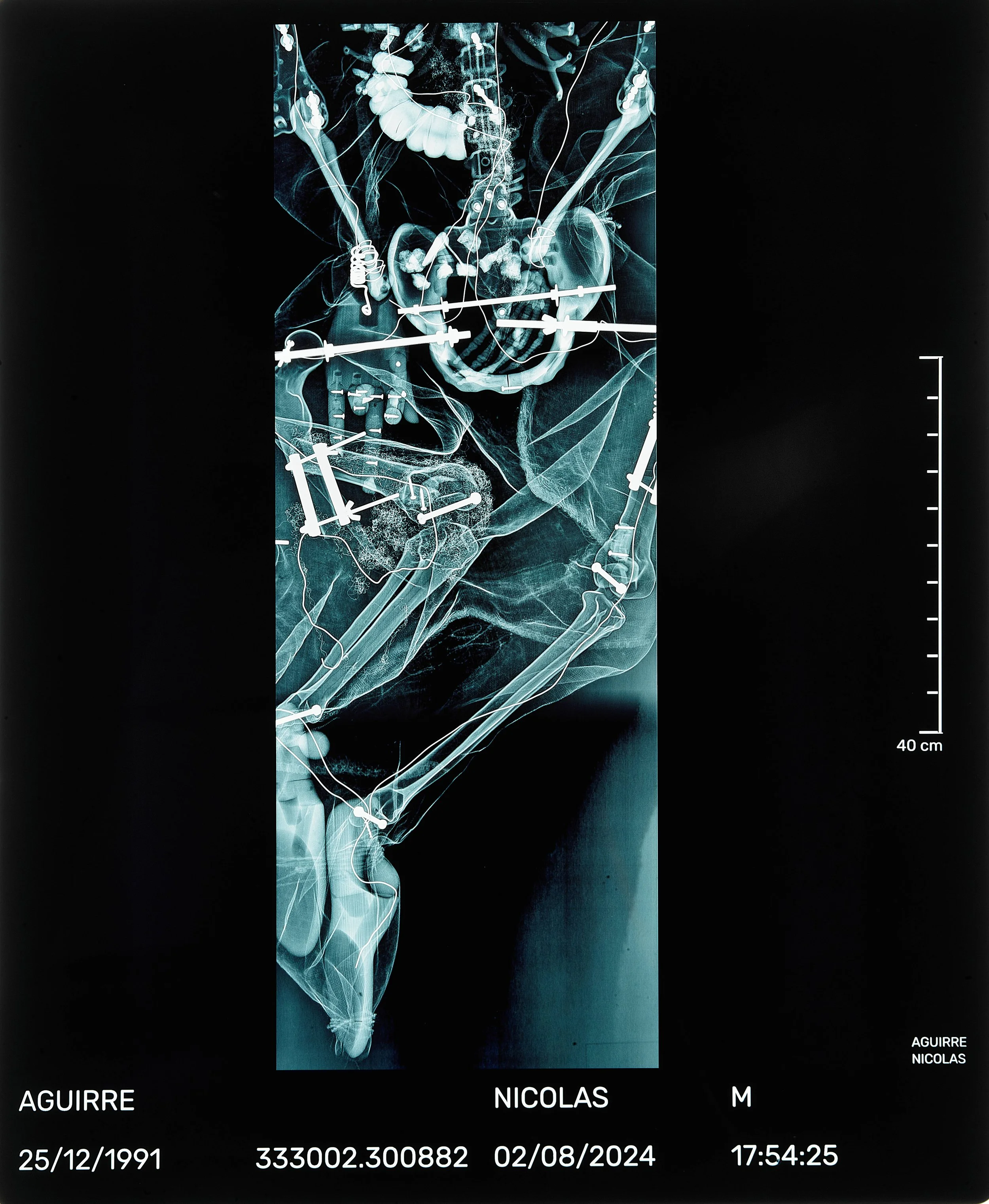
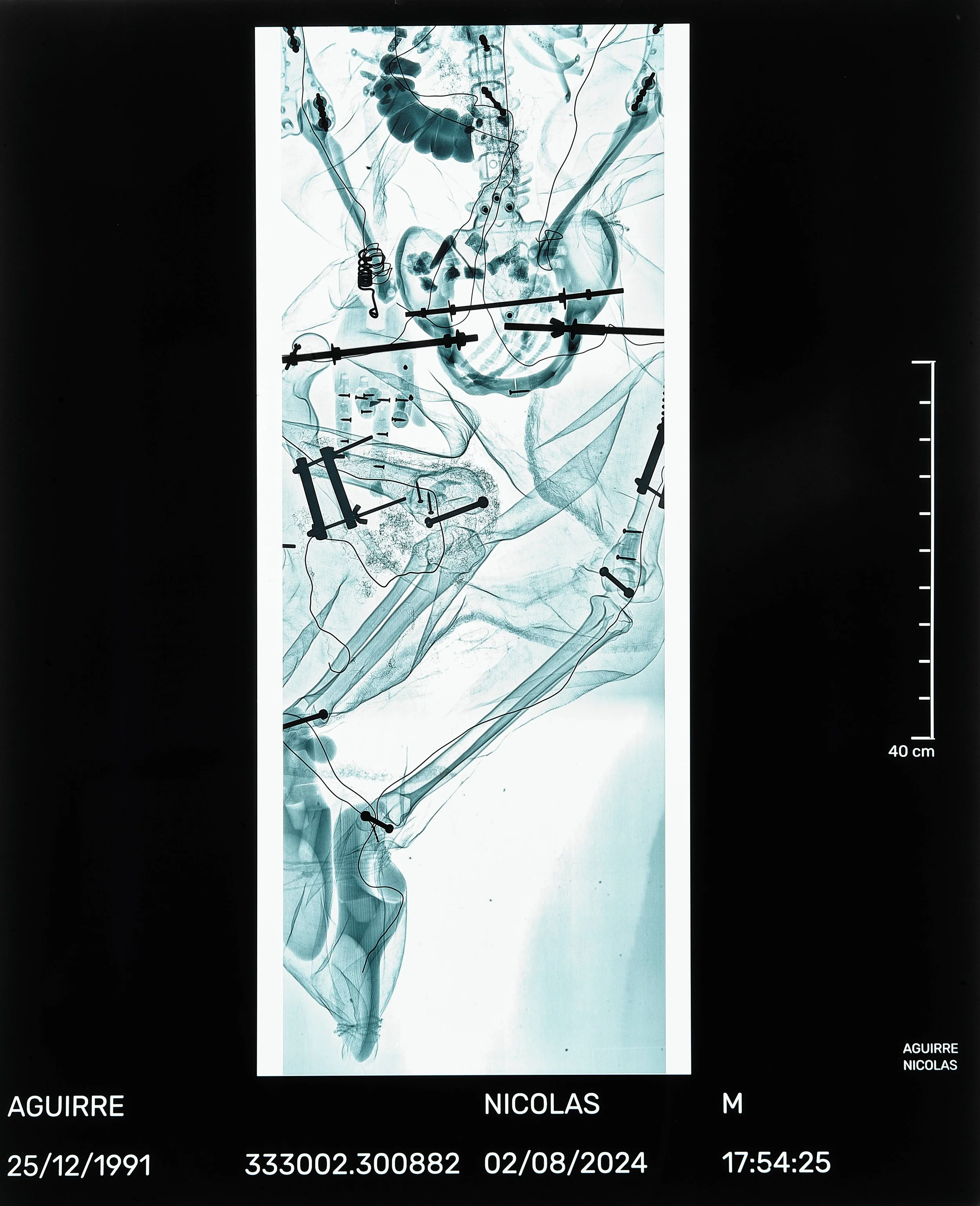
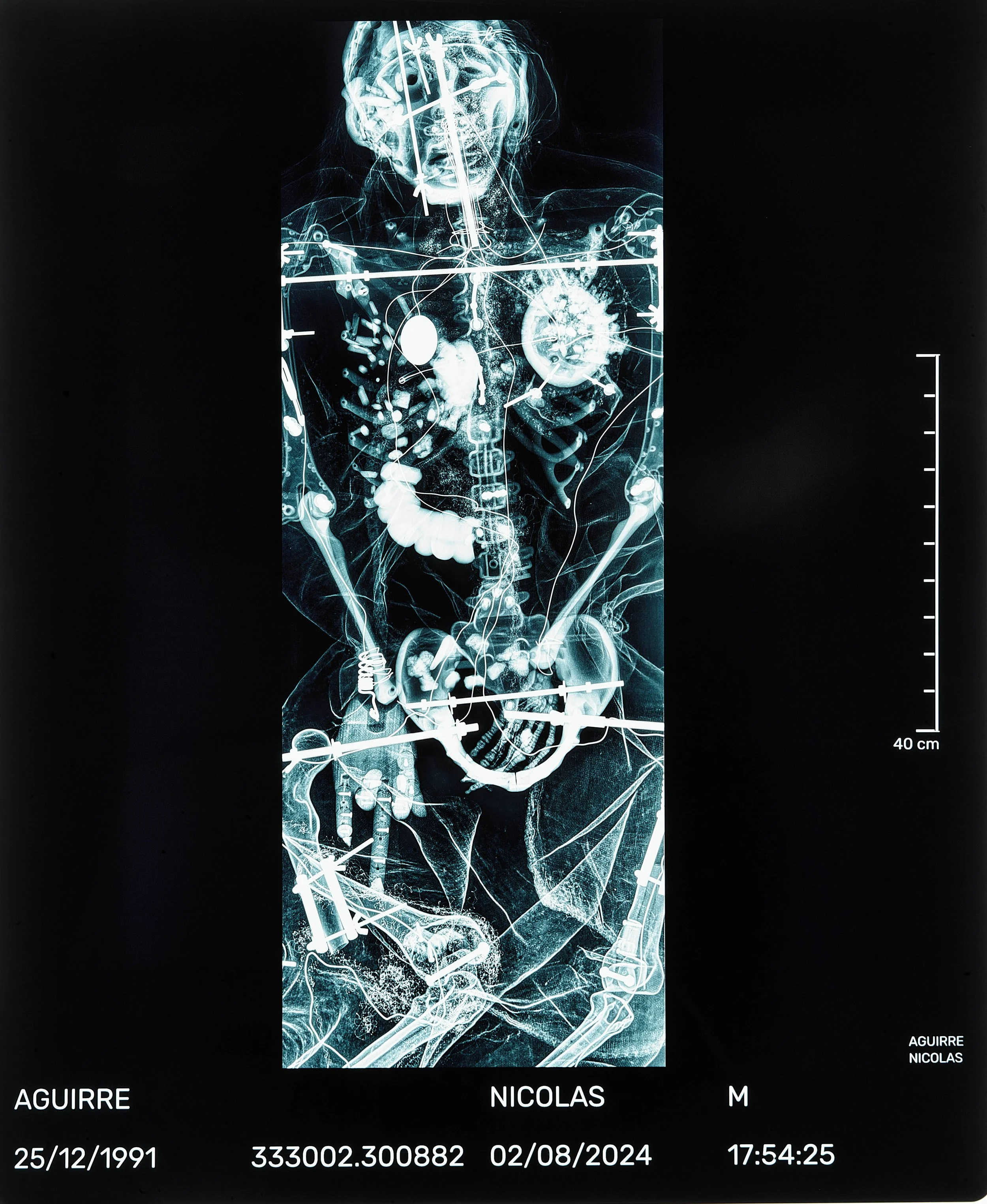
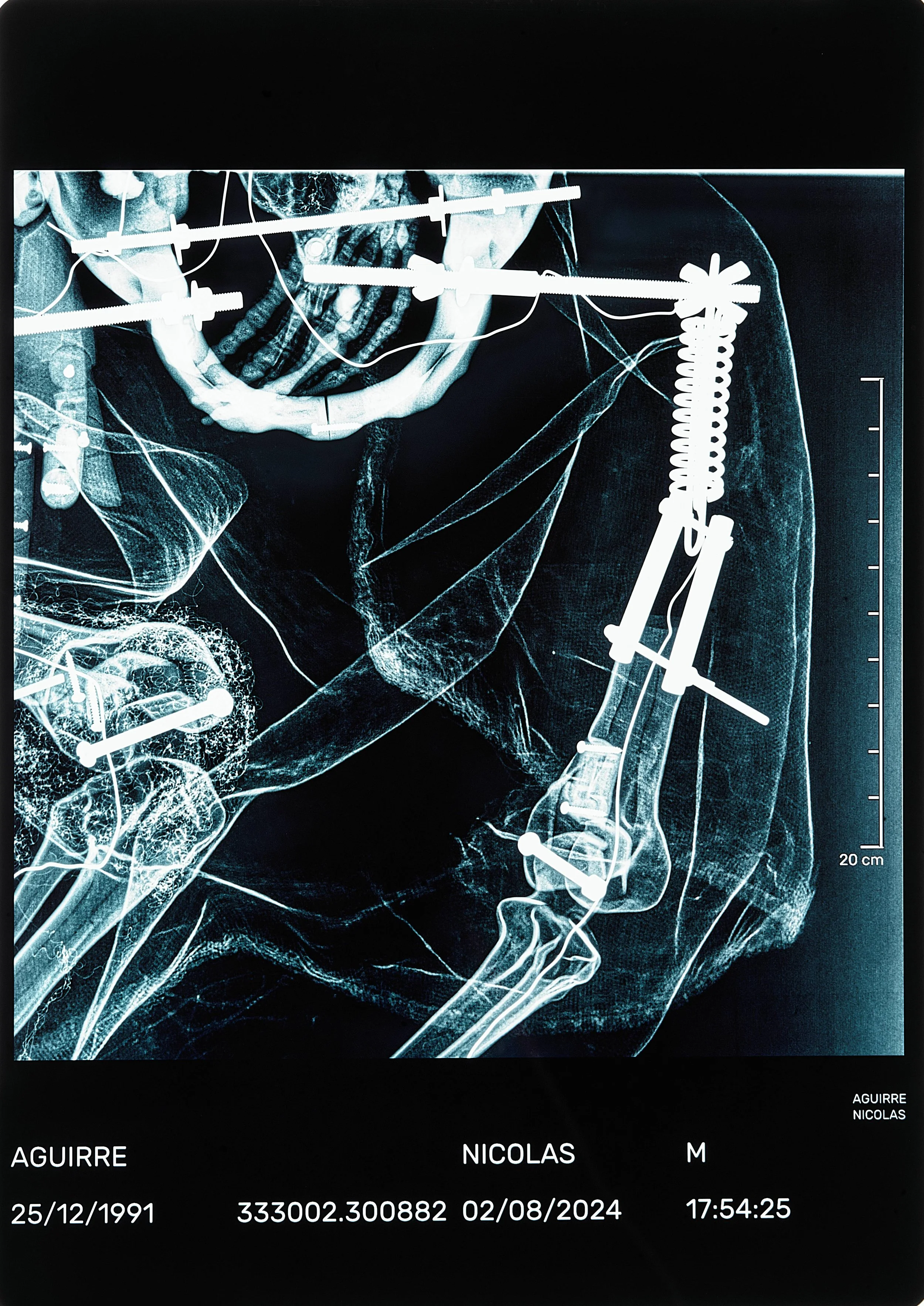
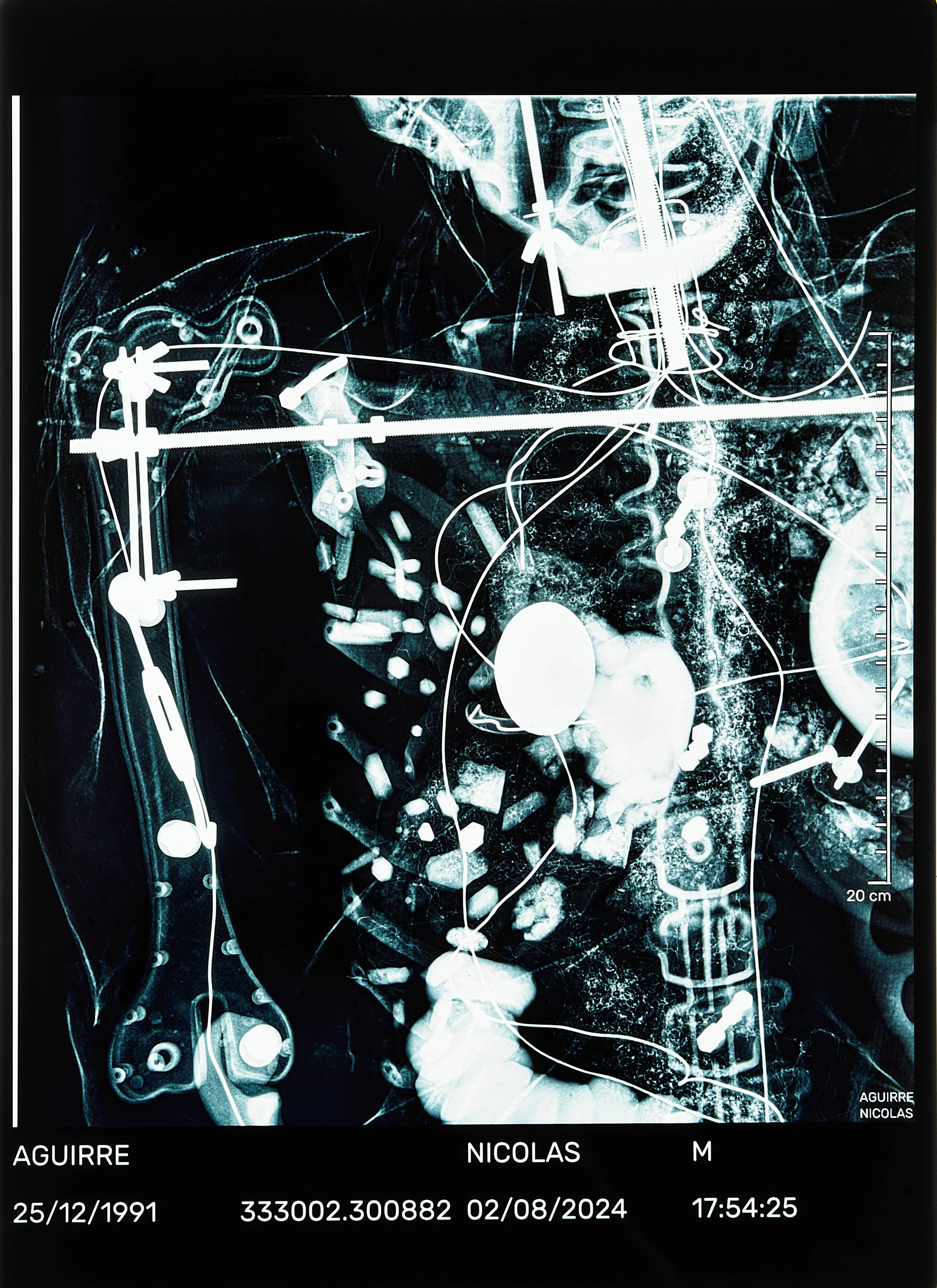
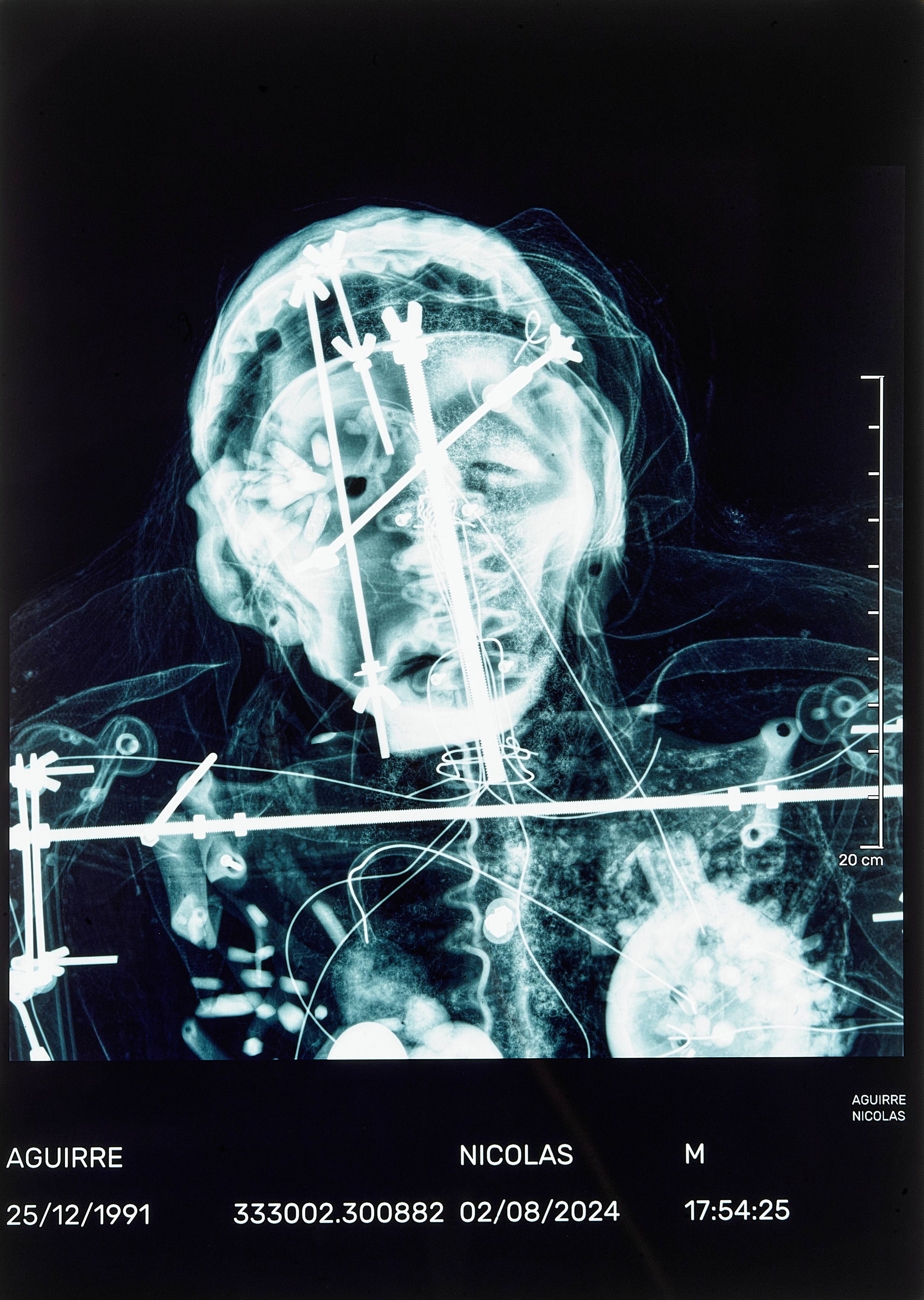
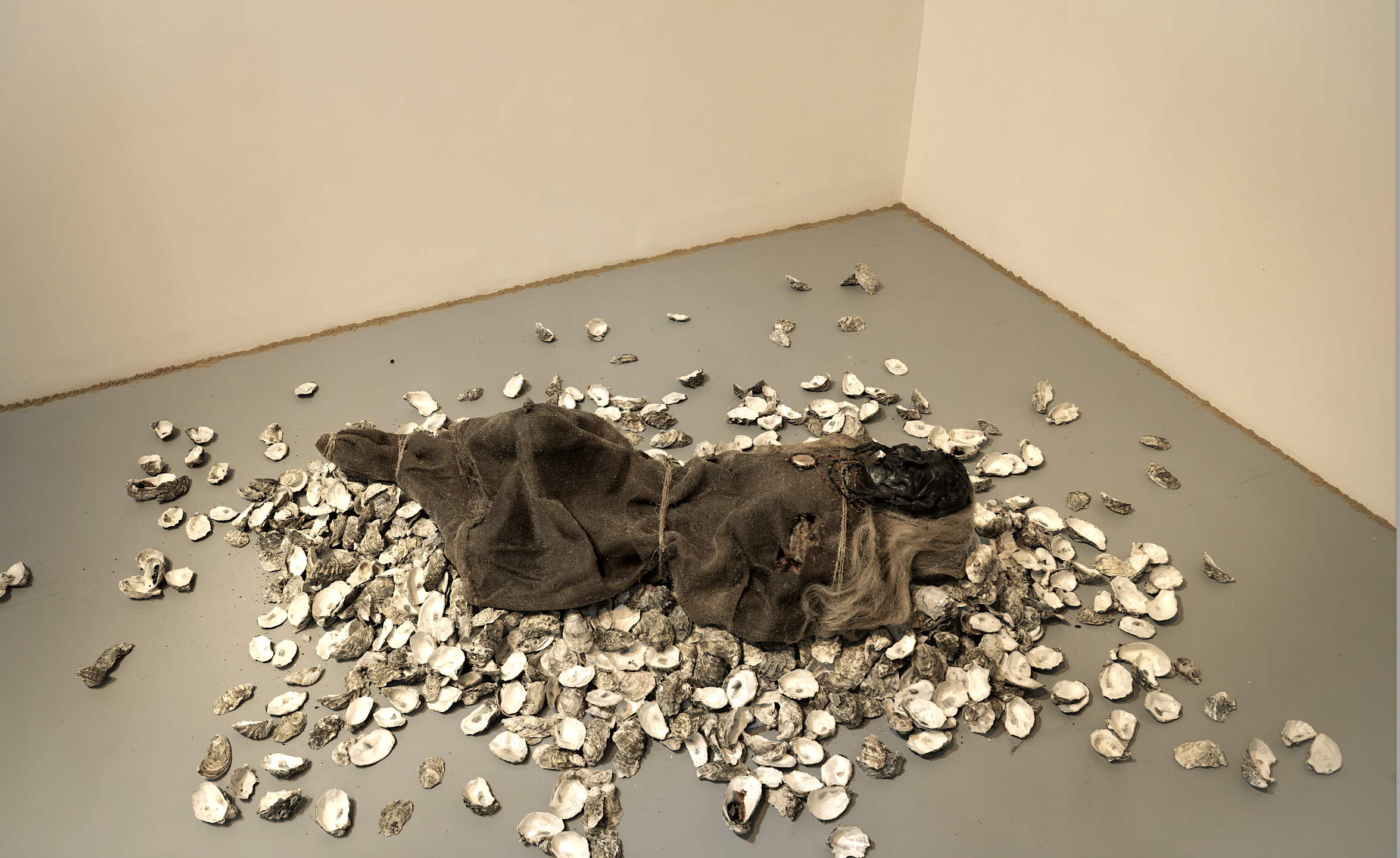
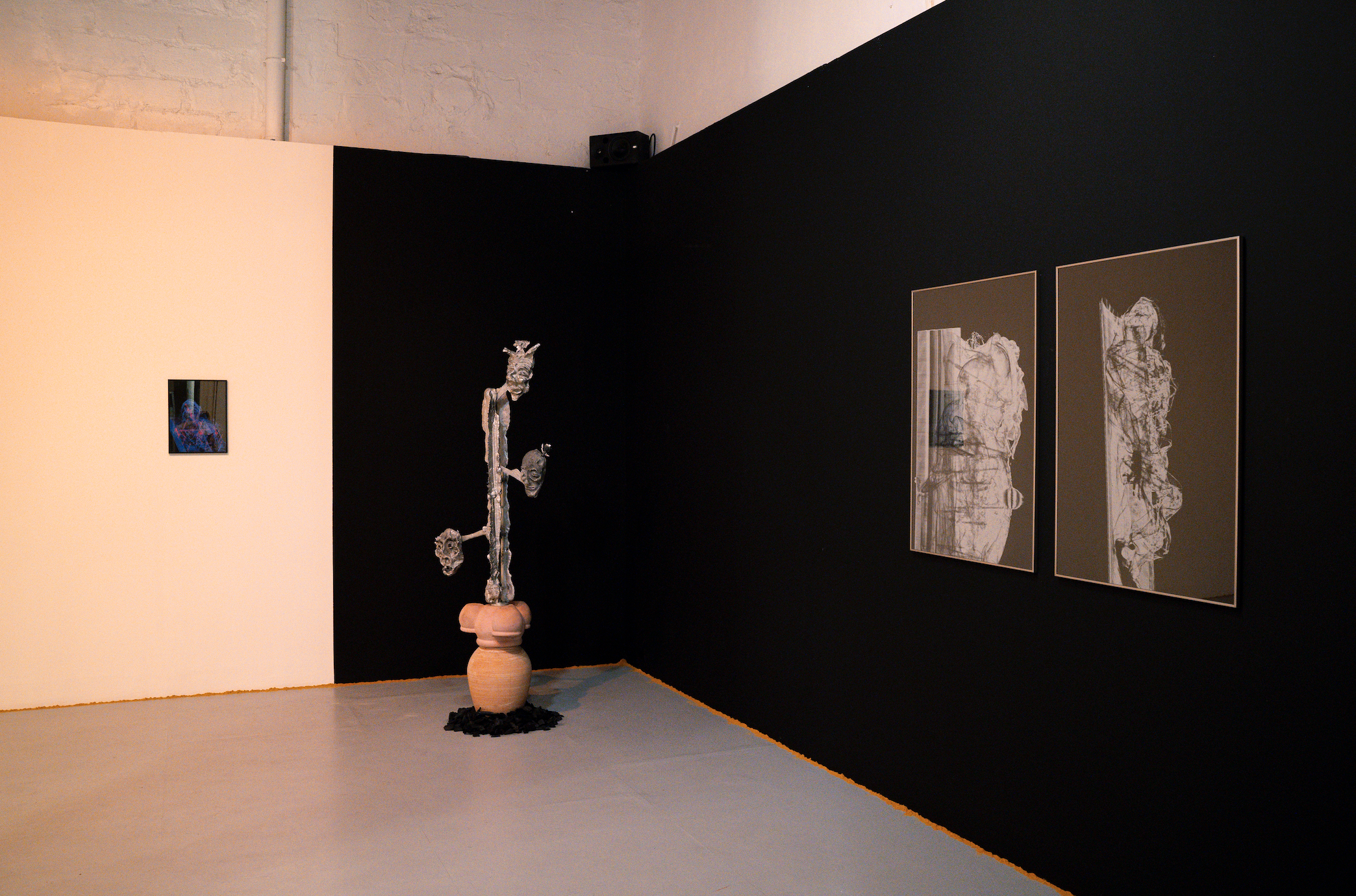
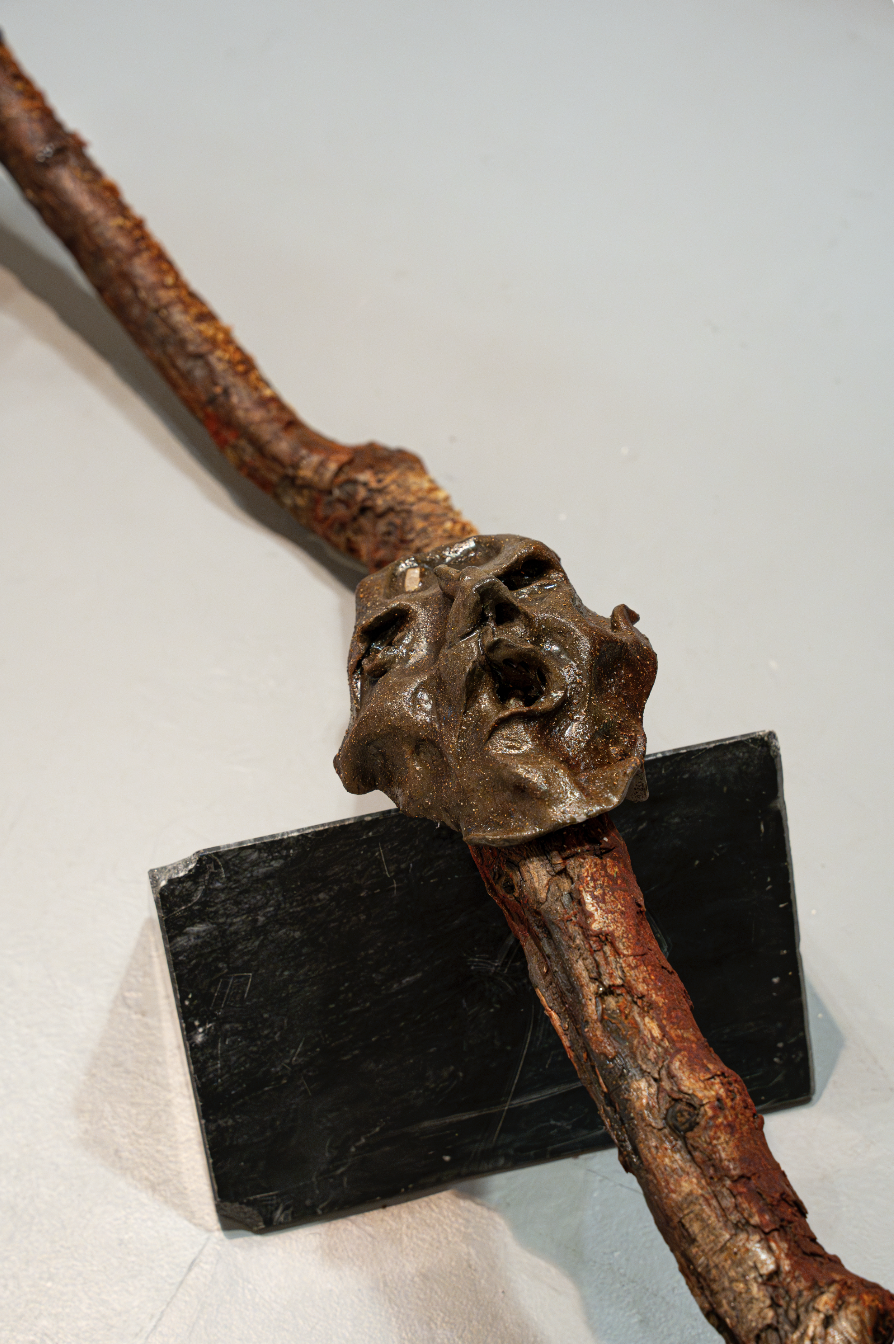
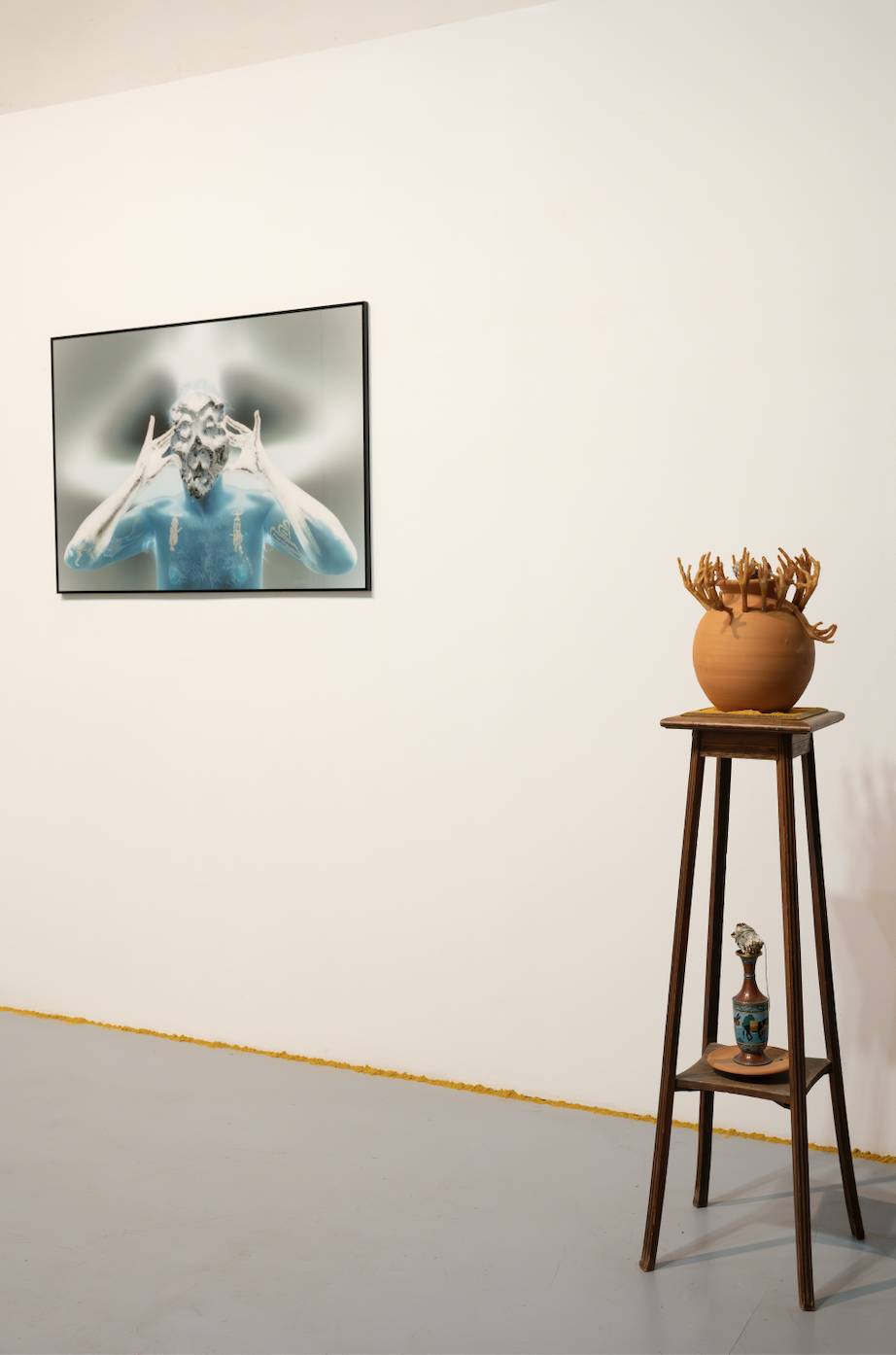
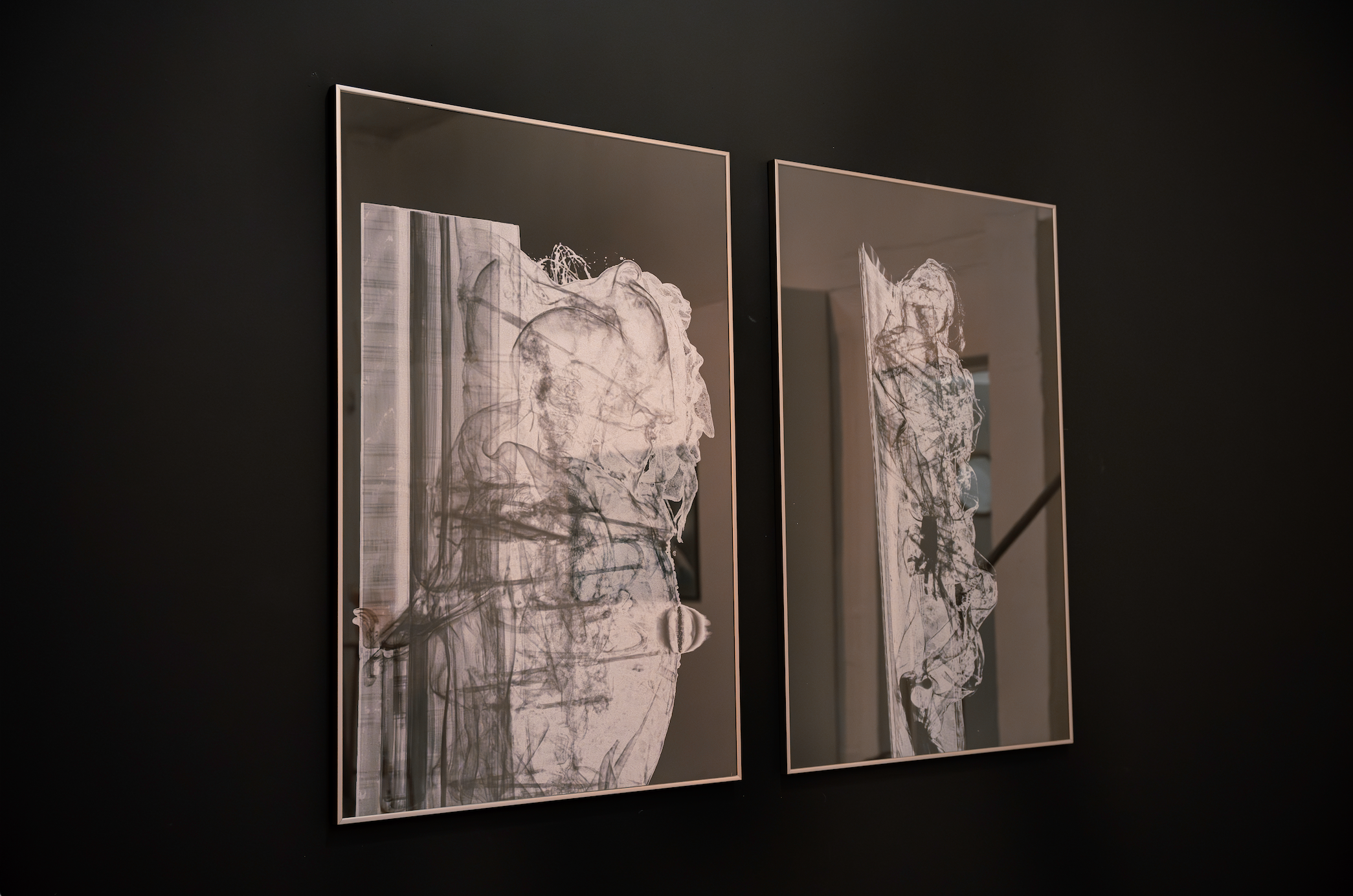
Carpaccio – Exploration of a Static Body is an artistic project that envisions the human body as an artifact suspended in time. It revolves around an installation, blending sculpture, medical imaging, speculative archaeology, and ritual. The title evokes the idea of slicing or layering, as in the Italian dish carpaccio, suggesting a stratified construction of the work and the preservation of flesh in thin slices.
Carpaccio questions what it means to freeze the body in a posture of abandonment, recalling the bog bodies discovered in peatlands—naturally mummified remains, frozen in a gesture between sacrifice and eternal rest. Here, the body is presented as caught between life and death, its form and history preserved for posterity, a modern mummification where technology dialogues with the archaic.
The X-rays, created in collaboration with a radiologist in Alès, become the heart of the project. They reveal the body’s invisible layers, later translated into sculptural volumes, where each stratum tells a buried memory.
To extend this reflection on the materiality and memory of the body, I invited Simon Starling to write a text between fiction and poetry around this work, titled Rope Work, thus creating a new collaboration that explores the links between gesture, trace, and transformation.
Rope Work
We split rope together, you and I.
Hemp lengths divided three ways. You hold one strand, I another. The third is hitched to a post. We walk away and apart, a Y with a writhing tale forming across the grass. Carrying the memory of its manipulations, the divided material tangles as we come back together.
Ropes cohere not because of inertia but because of the contrary forces of torque and friction imparted to them by the hand or machine of the rope maker.
The friction of opposed torsions.
Us and it.
Later, we talk of basket burials in the high Andes. Bodies, bound in the foetal position with woven fibre ropes – sisal from local succulents – were readied for rebirth, facing the rising sun that penetrated their lofty tower-tombs through one small, east-facing aperture.
Death not an end, but a part of the cycle of life.
Later, a hunter presents you with a roe deer skull. You draw it at night, with graphite bound
in clay.
A full moon over the bay.
As you draw, you speculate, like ‘famous Seamus’ once did, about visiting the man pickled in the ‘caldron bog...trove of the turf cutters... bridegroom to the goddess...his last-gruel of winter seeds, caked in his stomach.’3
You, like Heaney in his poem, voice the names, ‘Tollund, Grauballe, Nebelgård’, invoking something of the sad freedom of his ‘saint’s kept body’.
Bog man. Bog dog. Bog wood.
Palo Santo.
You talk of a ‘fascination rooted in memory’. A preoccupation with a now four-meter-high ‘family guardian’, a San Pedro cactus planted to mark your birth.
Apotropaic magic. Succulent charms.
Saint Peter was the keeper of the keys to heaven. His eponymous cactus yields mescaline, hot in the system, unsettling a sense of time and space – a way, some say, to heaven on earth.
Crassulacean Acid Metabolism (or CAM photosynthesis) is a temporal cheat, we’re told. It divides photosynthesis in succulent plants into two stages, avoiding water loss in harsh climates by storing CO2 in the cool of the night.
I recount how, in Osaka, Miichi san spoke of Noh masks made of camphor wood which have a hallucinogenic effect on the wearer, enhancing the ritualised possession of the living by the dead.
How Carlo Scarpa died suddenly falling down a flight of stairs on a visit to Japan in 1978. And how, according to his last wish, the Venetian architect was buried standing upright like a medieval knight, eternally guarding his masterpiece, the Brion Tomb.
You give yourself up to the mouth of the scanner – a high-tech sepulchre of sorts – your knees up, foetus-like. Breath held, the hot flush of dye coursing through your body, you clutch at a clay pot.
‘Pots crumble; bodies disintegrate’ writes the archaeologist.4
‘The us and the it slip-slide into each other.’5
I read that the first painting in history to be given a CT scan was of a song-bird, fabled for its protective powers. What they saw in the scans of Carel Fabritius’ The Goldfinch was that the painting ‘bears the traces of a blast, the miniscule indentations of hurtling matter, broken shards, hard pellets blown scattershot through the air, across the room, pocking into the surface in an instant.’6 Unlike its creator, buried under the rubble of his studio following the Great Delft Thunderclap of 1654 – a gunpowder arsenal explosion that demolished a large part of the Flemish city – The Goldfinch, its then still-wet-surface open to the blast, lived on.
‘Alive ensepulchred.’ 7
While twisting these few threads together, an image arrives of the sun setting over your
bow wave as you plough on across the ocean.
1 Seamus Heaney, The Tollund Man, 1972 2 Tim Ingold, Making, 2013 3 Jane Bennett, Vibrant Matter; The Political Economy of Things, 2010 4 Laura Cummings, Thunderclap: A Memoir of Art and Life and Sudden Death, 2023 5 Thomas Hardy, The Blinded Bird, 1916