Champ d’echange d’âme
Possédé.e.s, MO.CO Panacée, Montpellier, 2020
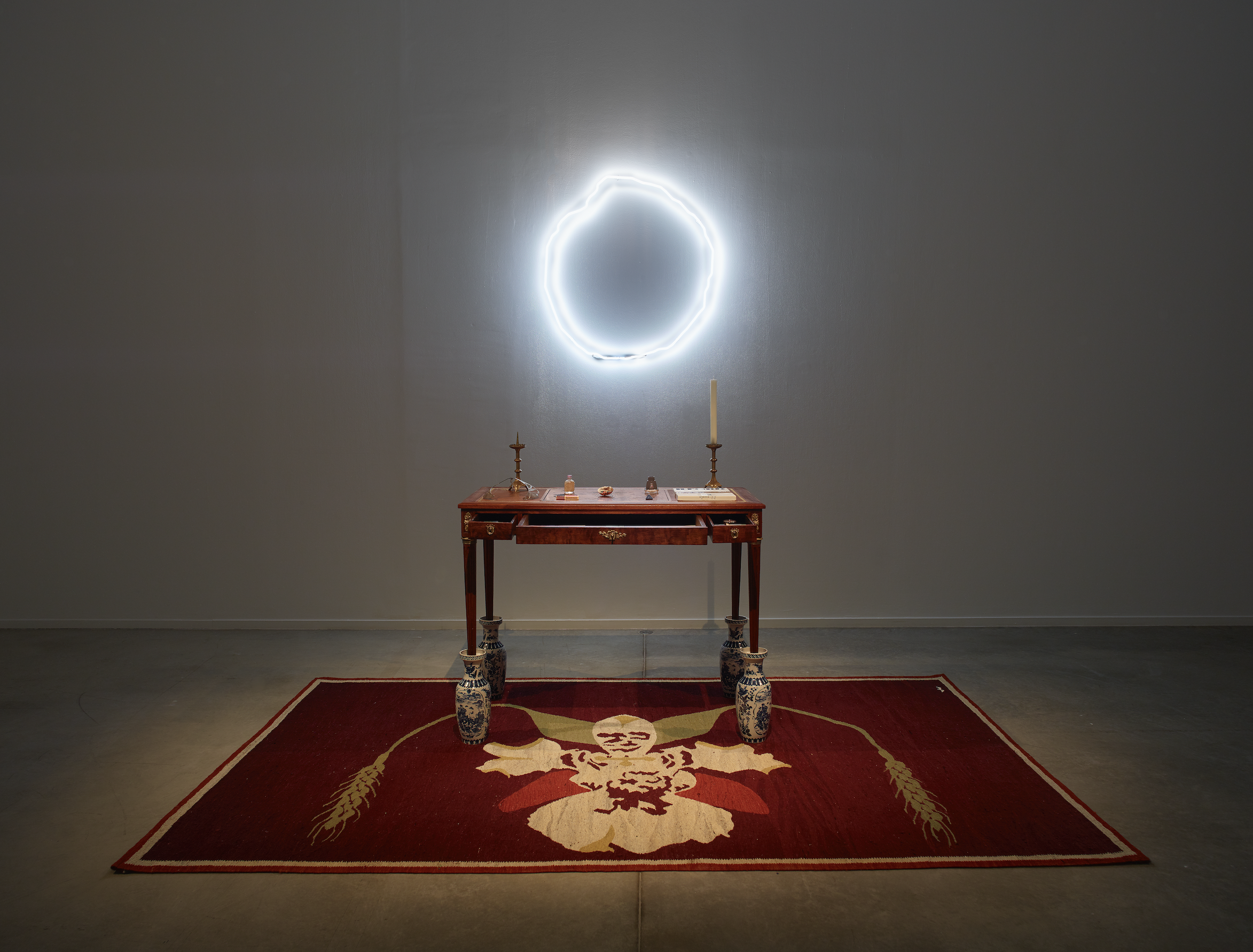
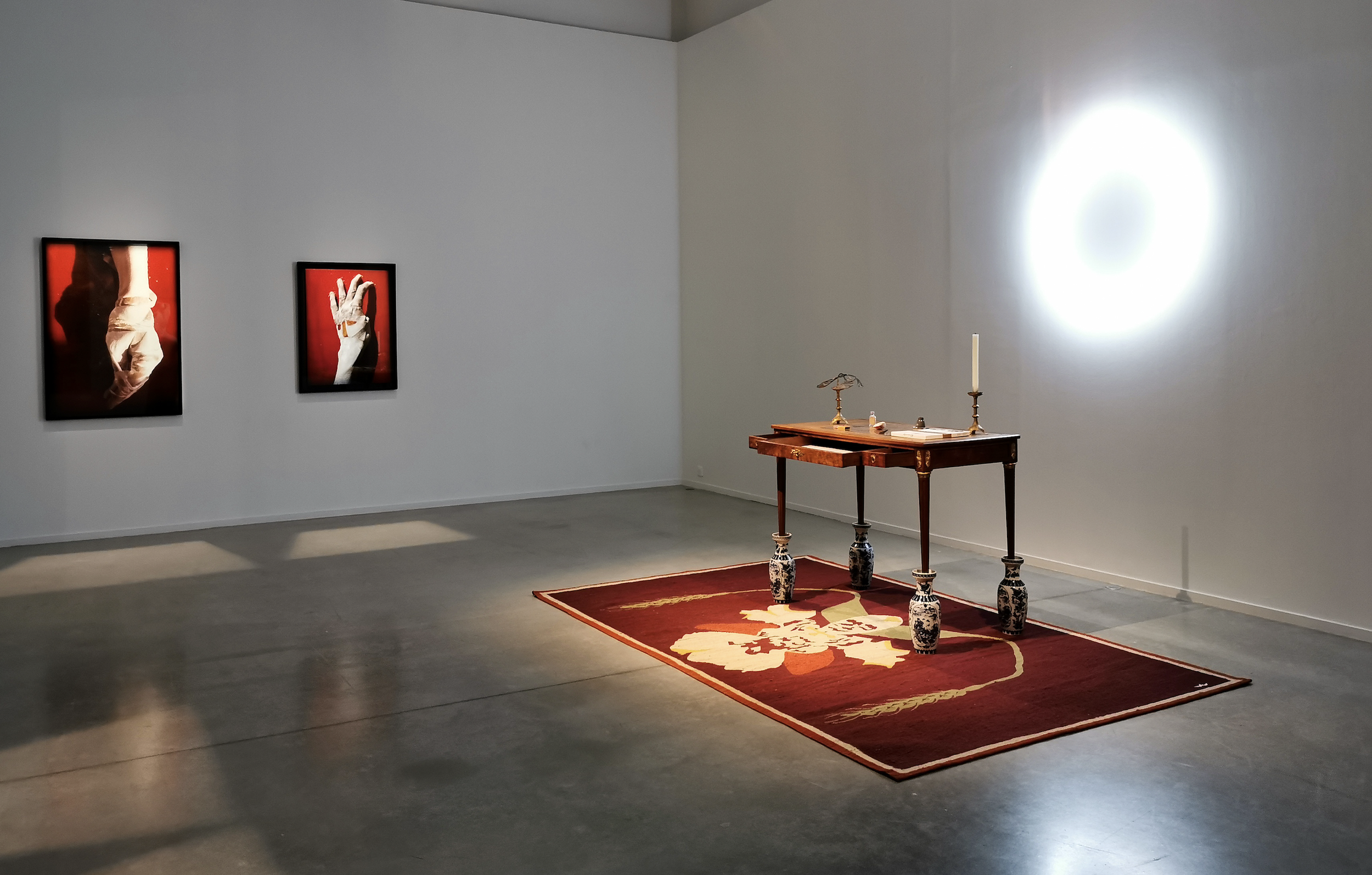
« The installation presented fragments of materialized souls, displayed as offerings on copper pedestals »
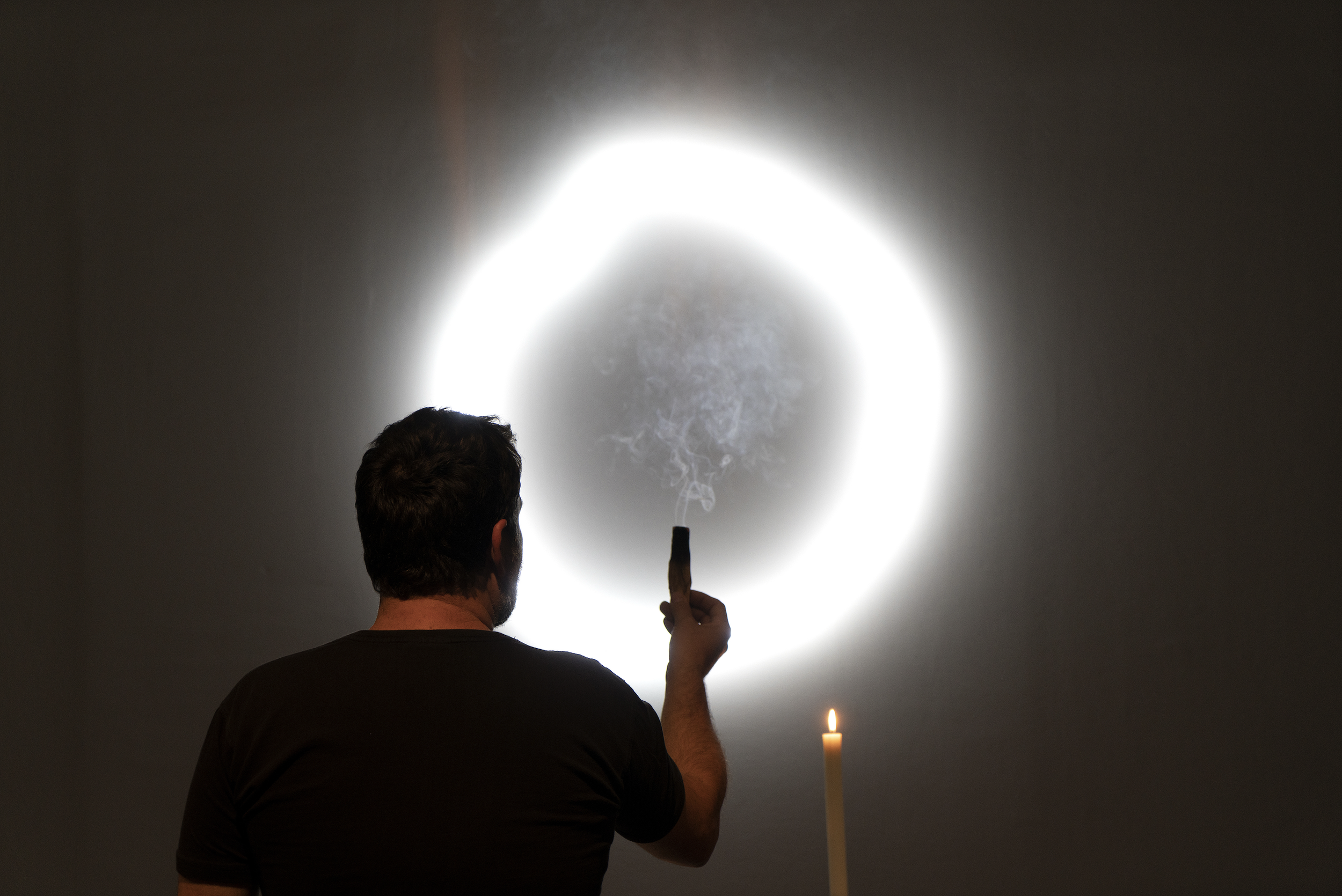
From his family, his Franco-Ecuadorian origins, and his traditions, Nicolás Aguirre draws his artistic sensibility, his respect, and his belief in shamanism. Rituals precede the installation of his works, notably the burning of Palo Santo to release the magical aroma of the wood, to give thanks, and to “purify” the exhibition space. The wood and the match are left behind in the space, as a trace of the ritual.
From his art studies, he gained knowledge and mastery of different techniques—among them printmaking—his pleasure in installation, meaningful encounters, and a commitment to collective intelligence as a way of working. He creates protocols of installation and continually surrounds himself with artisans; here, for example, a Turkish weaver created a kilim whose motif is an orchid, symbol of perfection, wisdom, and spiritual purity.
From his dreams, Nicolás Aguirre draws his works. The most recent: Échange d’âme (Soul Exchange). This piece is the third act in the grand opera on the soul that the artist is orchestrating, moving from one medium to another, pushing further each time his reflection on the materialization of the soul—as a sacred rumor that spreads while transforming itself.
The first act of this opera was a performance: Poker d’âmes (2018). Players were invited to bet their souls. The game was disrupted by the presence of a Diablo Huma, a physical and spiritual trickster who distracted players and led them to lose.
The second act was his encounter with a lawyer to draft a contract of soul exchange and to sign it, for now with seven artists or close acquaintances. In exchange for their soul, they sent him an object of deep importance to them, symbolizing the shared part of the soul.
On stage, Act III: Échange d’âme, a work composed of both an installation and a performance. For the 21-minute performance, an opera singer reinterpreted various sacred chants and sang an excerpt from Robert le Diable—the story of a child born from the union of a mortal and a demon, seeking redemption through love and overcoming his hereditary inner demons.
The installation presented fragments of materialized souls, displayed as offerings on copper pedestals. Scattered throughout were remnants of the first two acts: poker chips and contracts stored in the drawers of a Louis XVI desk. The exhibition space became a purgatory where souls confronted a luminous obol, while the opera singer transformed into a ferryman between two worlds.
The next act will be to carry out excavations, searching for souls, and to create an archaeology of the void.
Caroline Chabrand